Legislative Insights
Legislative Session Review: Ohio
January 11, 2019 | Nathan Devers
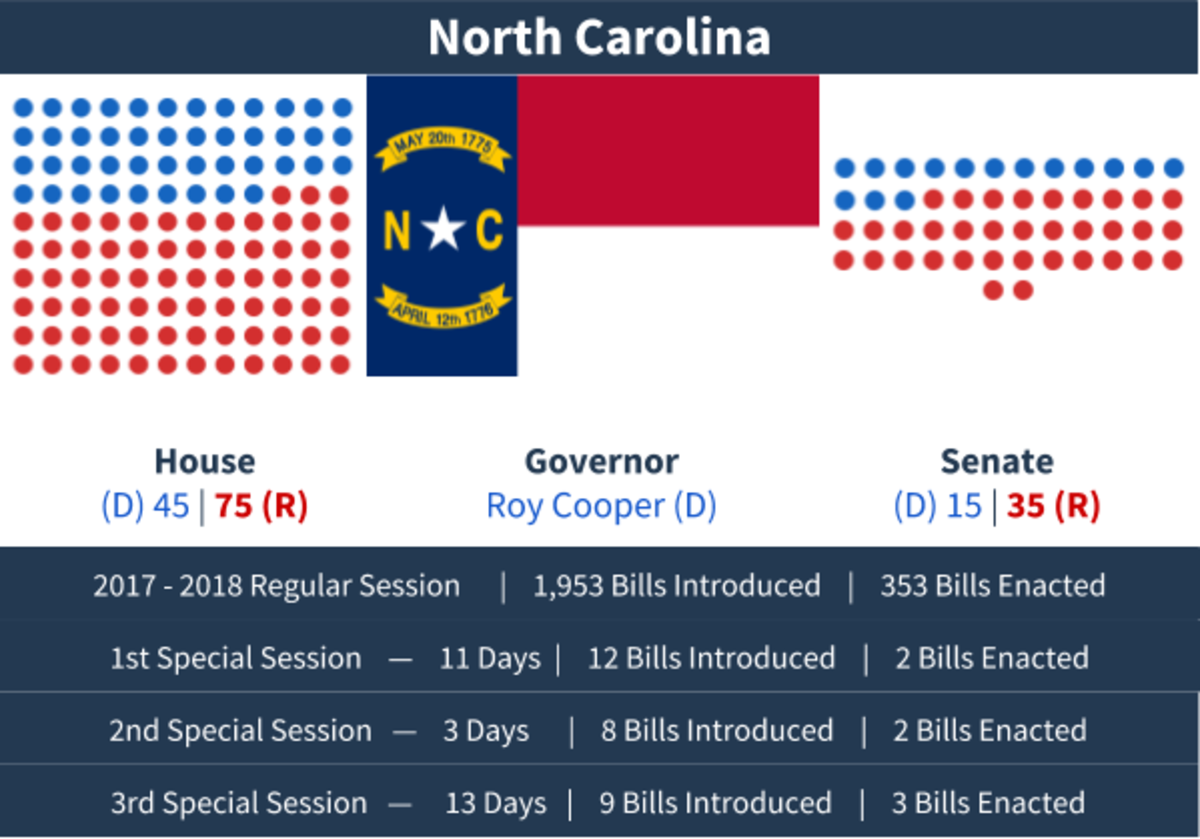
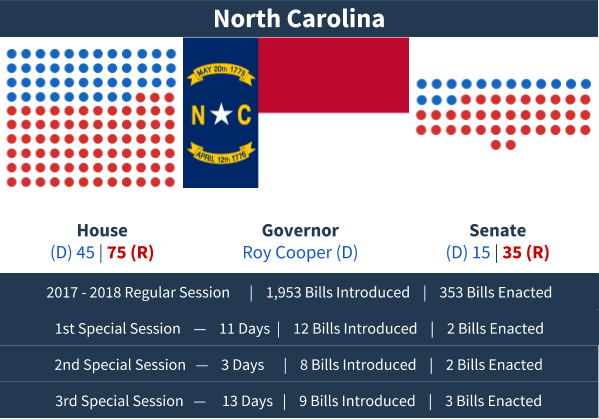
Legislators in Raleigh have long dubbed sessions held in even-numbered years as “short sessions,” but the North Carolina General Assembly’s 2018 session seemingly would not end. Short sessions always kick off in mid-May and typically end when the House and Senate finish passing the budget, usually by the end of June. This year, however, lawmakers returned in November to implement several constitutional amendments that midterm voters adopted, continued to meet into December to override Governor Roy Cooper’s (D) vetoes, and managed to squeeze in three special sessions in the intervening months (plus, a major hurricane).
Legislative Highlights
Election Results
Voters dramatically altered the legislative landscape in North Carolina on Election Day, with Republicans losing supermajorities in both the House and Senate. Republicans retain control of both chambers in 2019, but by much slimmer margins than they have for much of the past decade, providing the Democratic governor with new leverage in the legislative branch.
Republicans will have a 29-21 majority in the Senate when lawmakers reconvene in January, down six seats from their 35-15 advantage prior to November. In the House, the GOP majority was reduced from a 30-seat supermajority (75 Republicans to 45 Democrats) to a 10-seat edge (65 Republicans to 55 Democrats).