Legislative Insights
Legislative Session Review: Ohio
January 11, 2019 | Nathan Devers
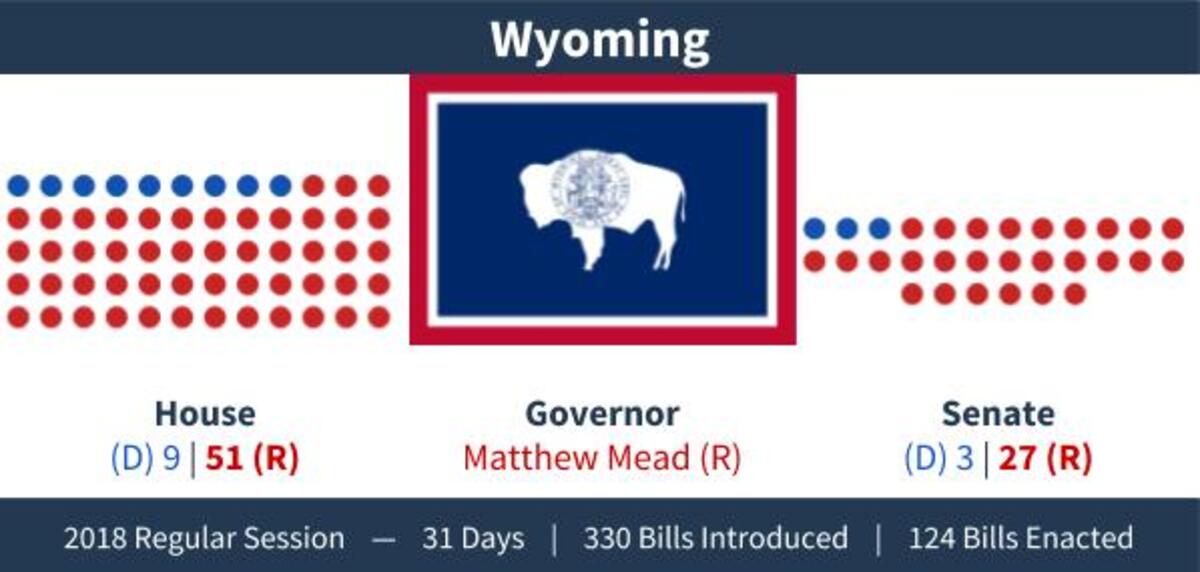
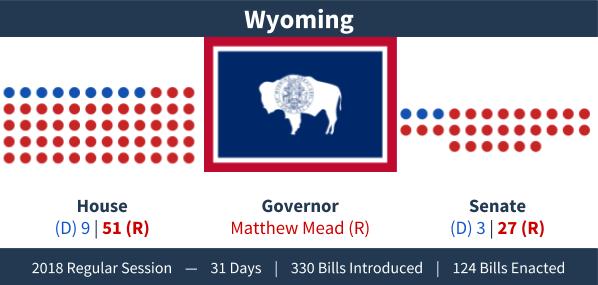
Wyoming adjourned its 2018 legislative session sine die on March 15, and Governor Matt Mead (R) finished acting on the bills sent to his desk on March 27. Mead’s last action was signing a K-12 education funding bill. House Bill 140 reduces K-12 education costs by $27 million, adding to the $77 million already cut in recent years. Reductions come from a combination of factors, including changing the average daily membership formula, participation in Department of Workforce Services programs that reduce school district workers’ compensation premiums, altering the reimbursement for school bus leases and purchases, and limiting special education funding reimbursements for schools years 2019-2020 and 2020-2021, among other things. The biggest conflict of the session surrounded education funding because the chambers were divided on funding levels and how to pay for education going forward.
Legislative Highlights
Election Preview
Wyoming voters head to the polls November 6 to select a new governor to replace term-limited Mead. The candidate filing deadline is June 1. Currently, one Democrat and six Republicans have announced campaigns for governor. Wyoming is a comfortably Republican state, so the Republican primary on August 21 will likely be the more interesting race.
Voters will also select a new secretary of state in November. Current Secretary of State Edward Buchanan (R), whom Mead appointed on March 1 after Ed Murray (R) resigned amid sexual assault allegations, has not announced if he will seek the Republican nomination for the position.
Finally, 15 of 30 Senate seats and all 60 House seats in the state legislature are up for election in 2018. It is not likely that there will be any change in party control as Democrats currently only hold a dozen seats across both chambers.