Legislative Insights
Legislative Session Review: Ohio
January 11, 2019 | Nathan Devers
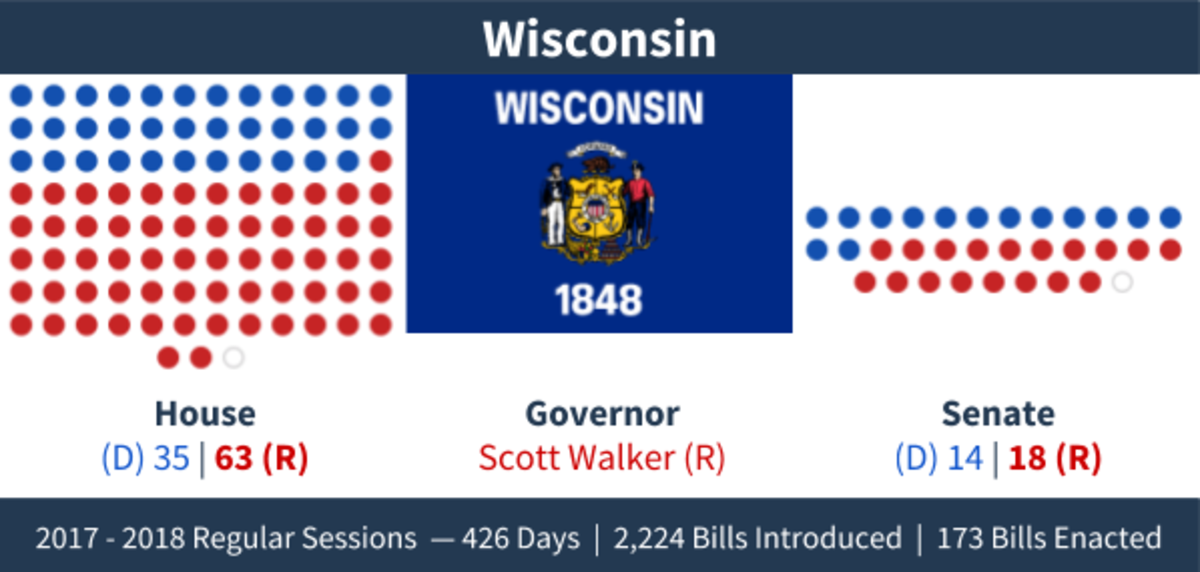
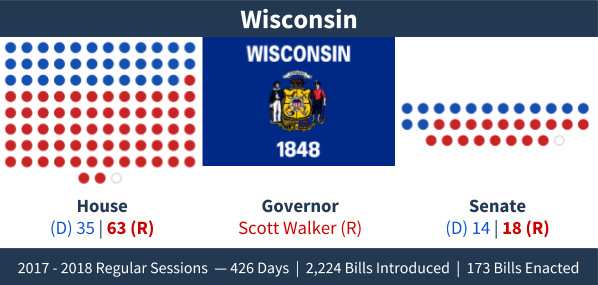
Wisconsin adjourned its 2018 regular legislative session March 22, and Governor Scott Walker (R) finished acting on the bills sent to his desk on March 30. The highlights of this year’s session included passing a sales tax holiday and child care tax rebate and allocating $100 million for new school safety programs.
Legislative Highlights
Election Preview
Wisconsin voters head to the polls November 6 to determine whether Governor Walker will be reelected to a third term. A crowded field of Democratic candidates is vying to replace the two-term governor, but no one has yet moved to the head of the pack. Although the governor faced a recall election in 2012 and is currently among the 15 least popular governors in America, many pundits say that Walker is favored to win reelection. Statewide elections for lieutenant governor, attorney general, secretary of state, and treasurer will also take place in November.
More immediately, the governor was forced to call a special election to fill two legislative seats that have been open since January after being ordered to do so by a federal appellate court. Walker argued against holding the elections, saying that they would be a waste of taxpayer time and money, but he relented after losing for the third time in court. The elections will take place on June 12. All 99 assembly seats and 17 of 33 state senate seats are up for election in November.